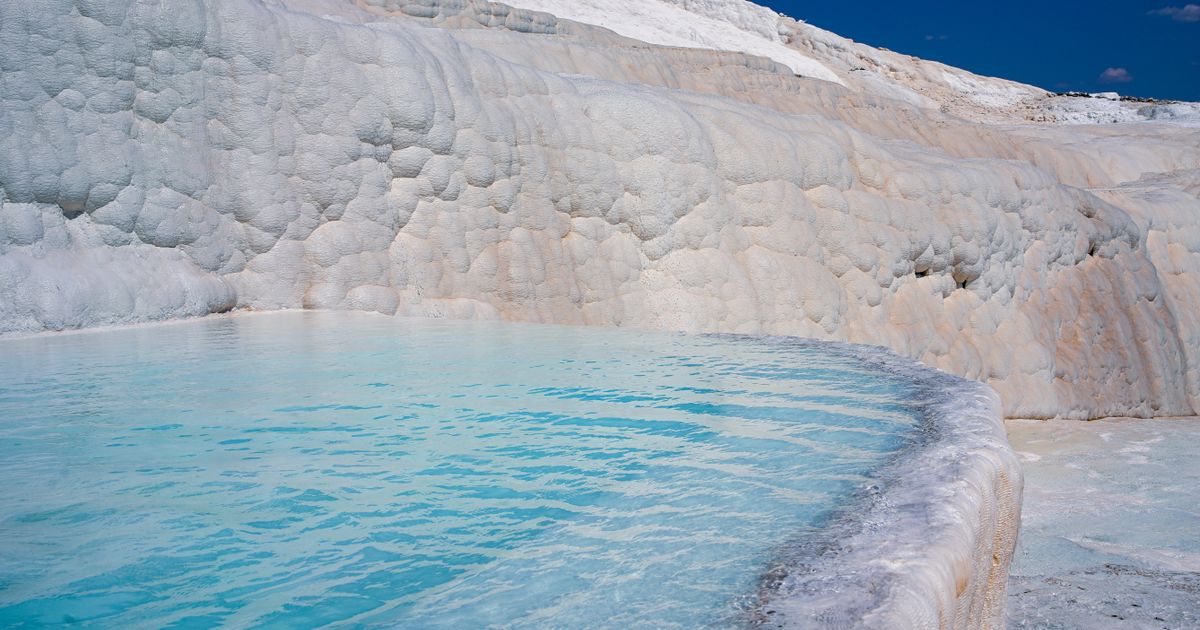
From a distance Pamukkale looks like a snow-covered hillside in the middle of a warm, green valley. Up close, the white is stone: mineral-rich spring water has flowed down the slope for thousands of years, leaving behind layers of calcium carbonate that have built up into terraces and shallow pools called travertines. The Turkish name means "cotton castle", and on a bright day the glare off the white rock is dazzling. Some pools have dried as the water is now carefully managed, so the flow is rotated between sections.
On top of the terraces sits Hierapolis, a Greco-Roman spa city founded around the same hot springs. Its restored theatre, long necropolis of tombs and sarcophagi, and colonnaded main street cover the plateau, and the Antique Pool — where you can still swim among fallen marble columns — is fed by the same warm water. Pamukkale and Hierapolis were listed together by UNESCO in 1988, and the combination of natural wonder and ancient city on one hilltop is what makes the visit so rewarding.
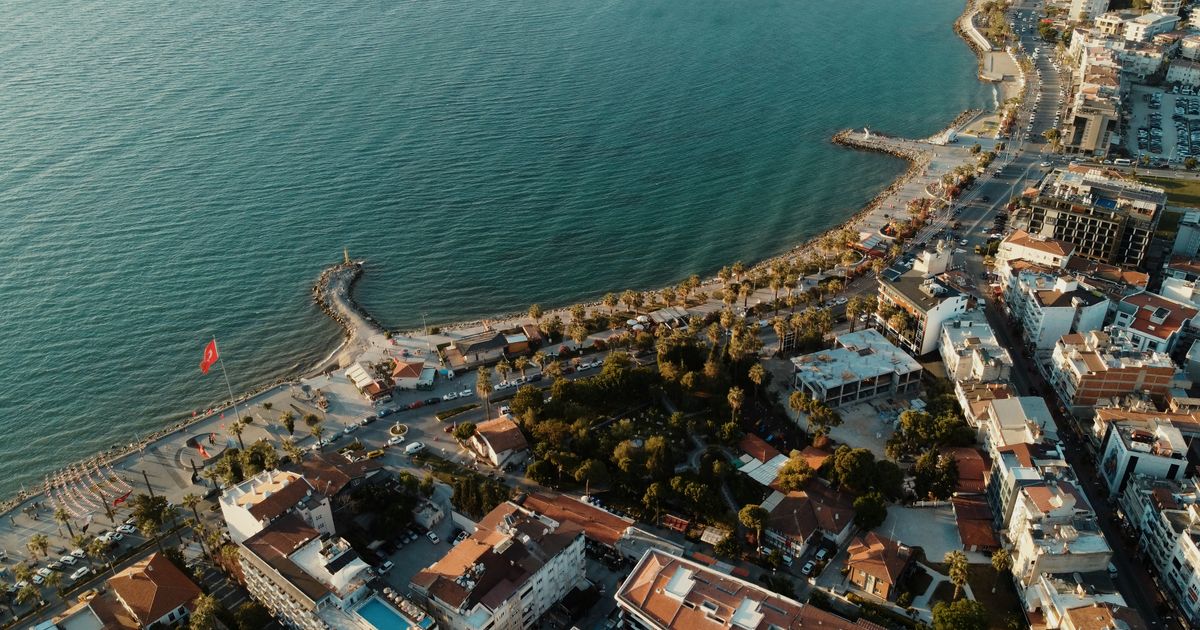
Pamukkale lies inland in Denizli province, roughly two and three quarter hours by road from Kuşadası, so it is often visited as a long day trip from the coast or as a one-night stop between Kuşadası and Antalya. The overnight option is worth considering: you can walk the terraces at sunset when the day-trippers have gone, and return for an early morning swim. The village below the terraces is small and simple, with family hotels and spa resorts nearby.